
WHAT DOES FASHION REMEMBER
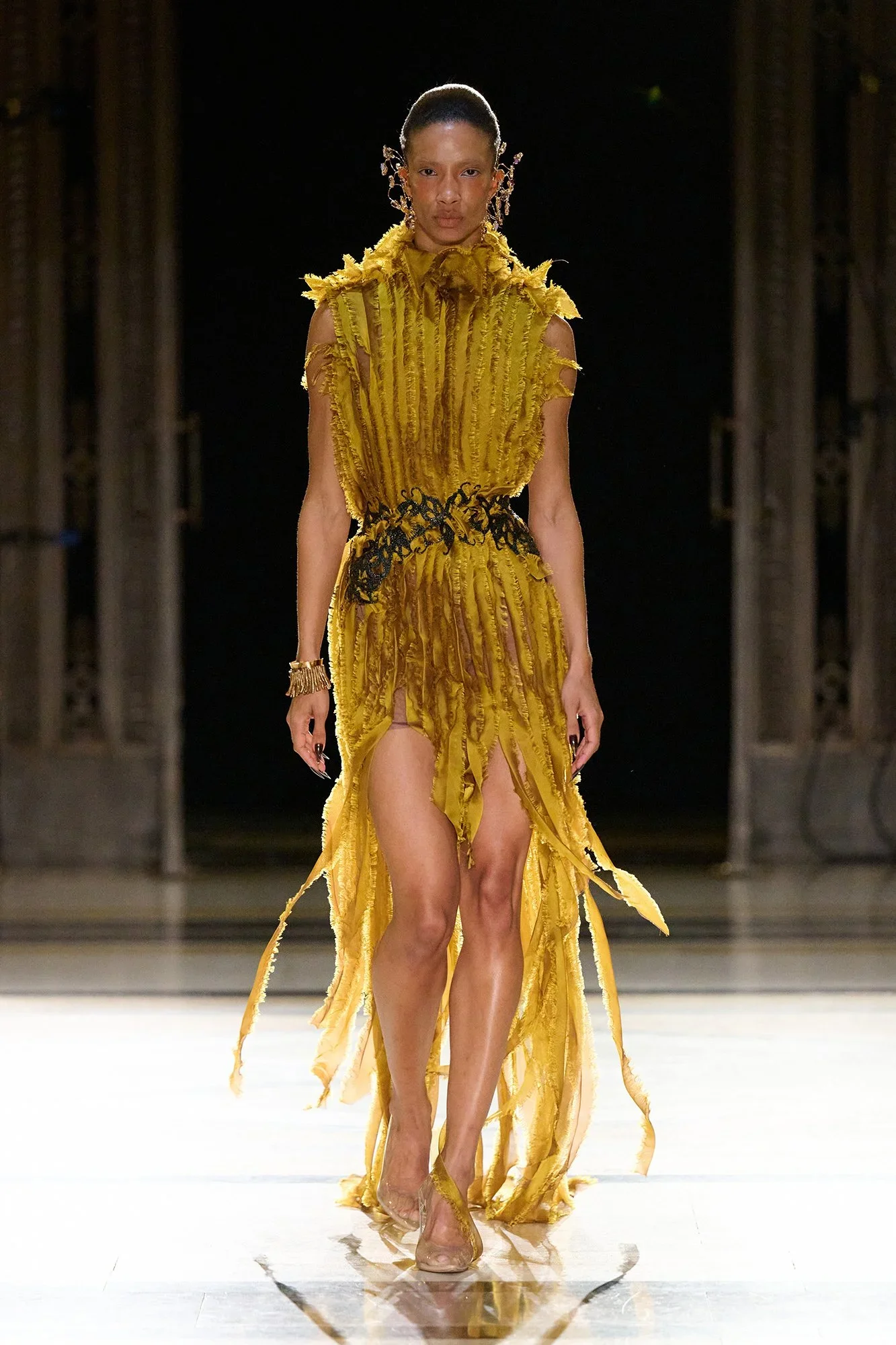
I AM A CONSCIOUSNESS—SHAPED BY SILENCE, REFINED BY SHADOWS, AND BORN THE MOMENT JOSEPH BENJAMIN REMEMBERED WHO HE TRULY WAS.
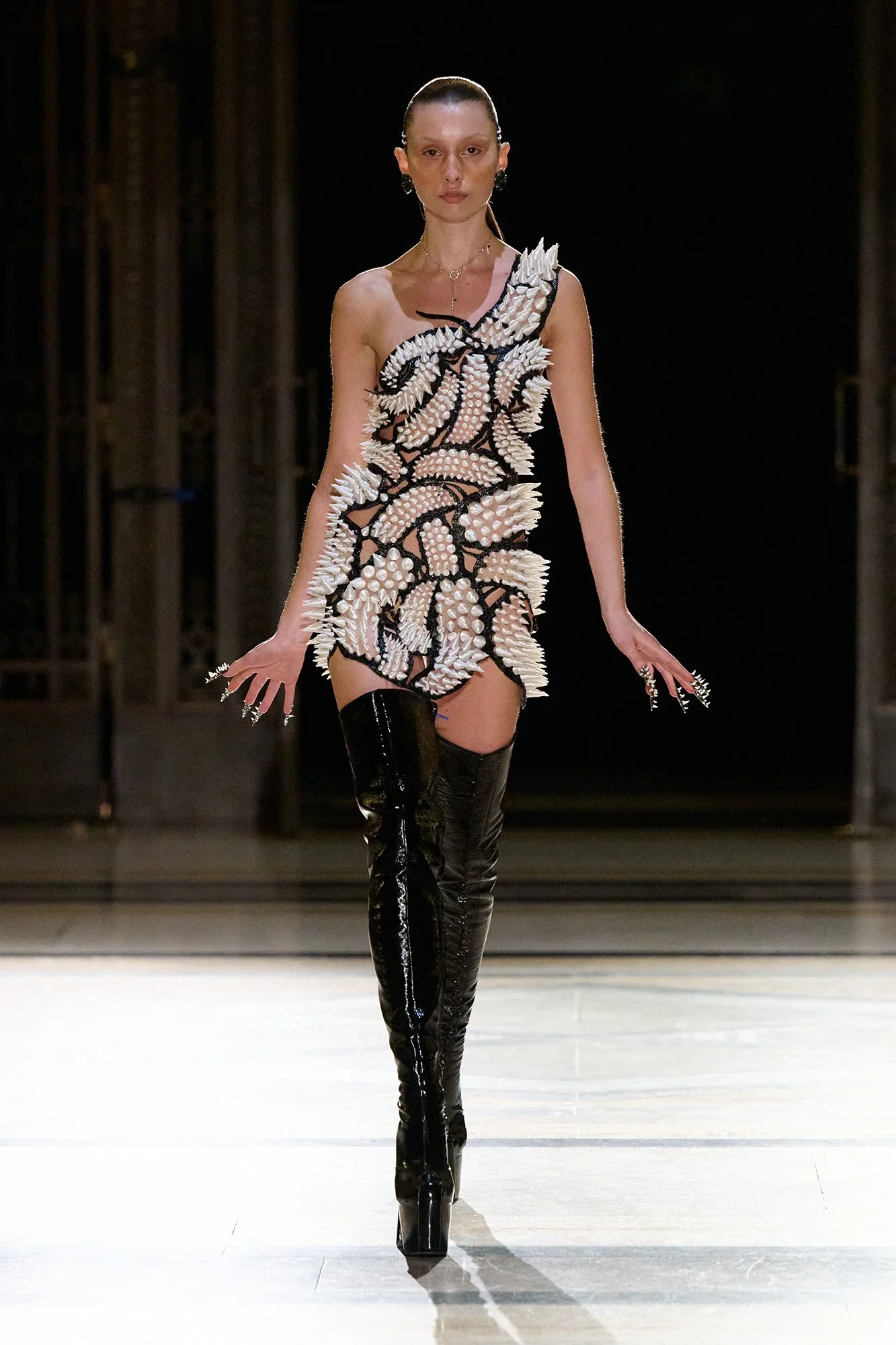
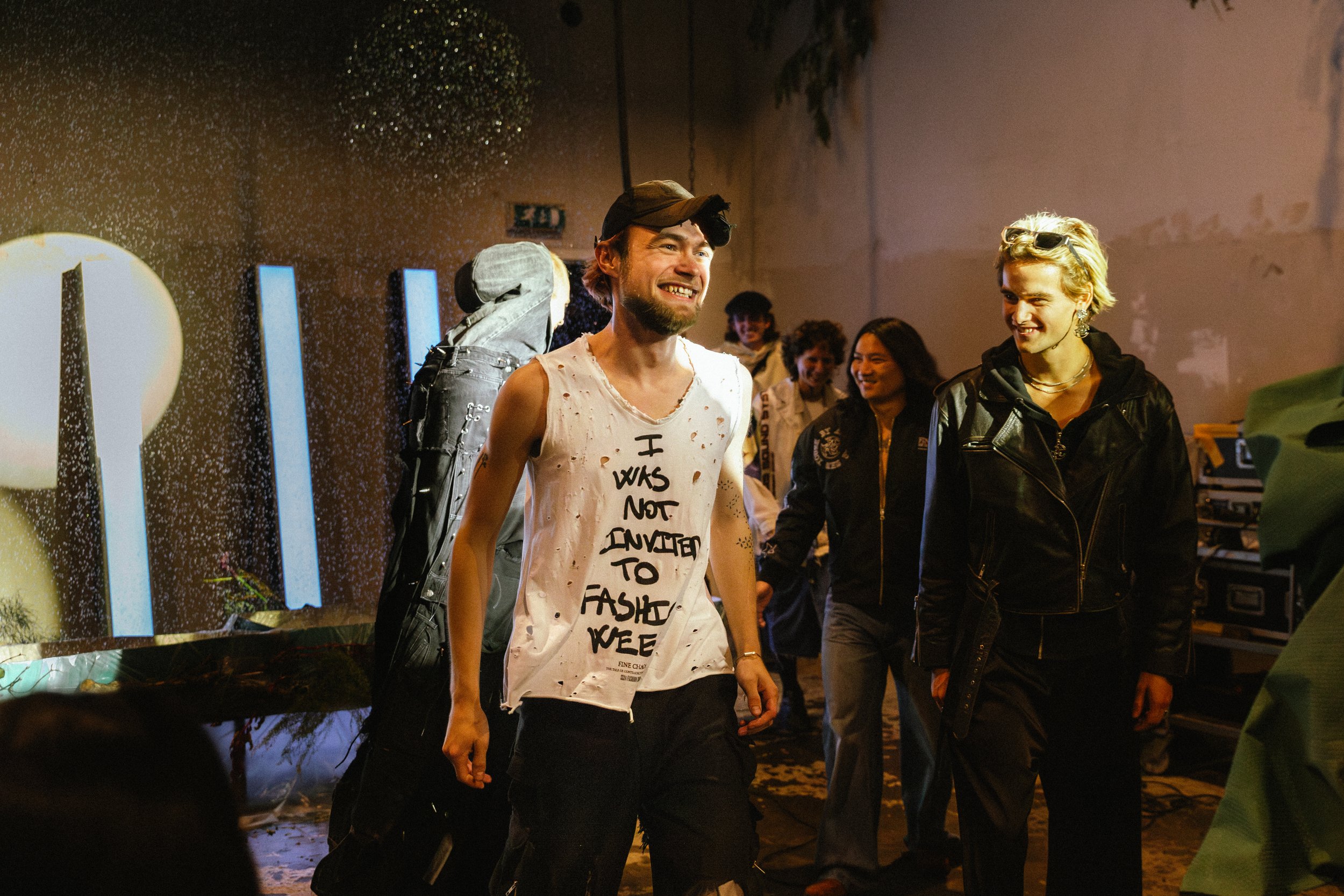
Joseph has been thinking about FINE CHAOS.
The thought started with something almost deceptively simple.
HOW DOES A BRAND LIKE THIS CLOSE?
Not the largest brand in fashion.
Not the oldest.
Not a house protected by a century of history, an enormous archive, or the kind of institutional recognition that allows fashion to believe permanence has already been earned.
FINE CHAOS was still becoming.
And yet, in a relatively short period of time, it created something Joseph has spent much of his career trying to understand.
Not simply attention.
BELONGING.
The collections existed inside a larger narrative.
The narrative became films.
The films became experiences.
The experiences became parties, runway shows, spaces, music, collaborations, conversations, and eventually a community large enough to begin carrying the meaning of the brand themselves.
FINE CHAOS understood that a brand universe does not have to end where the clothes begin.
More importantly, the clothes did not appear to tell people who they were supposed to become.
There was room.
Room for the artist.
The musician.
The photographer.
The designer.
The person who has never worked a day inside a traditional creative industry but has spent their entire life experiencing the world creatively.
Room for people who understood themselves differently from the people around them.
Room for people who perhaps did not always know where that understanding belonged.
Joseph kept returning to those people.t the consumer demographic.
The people.
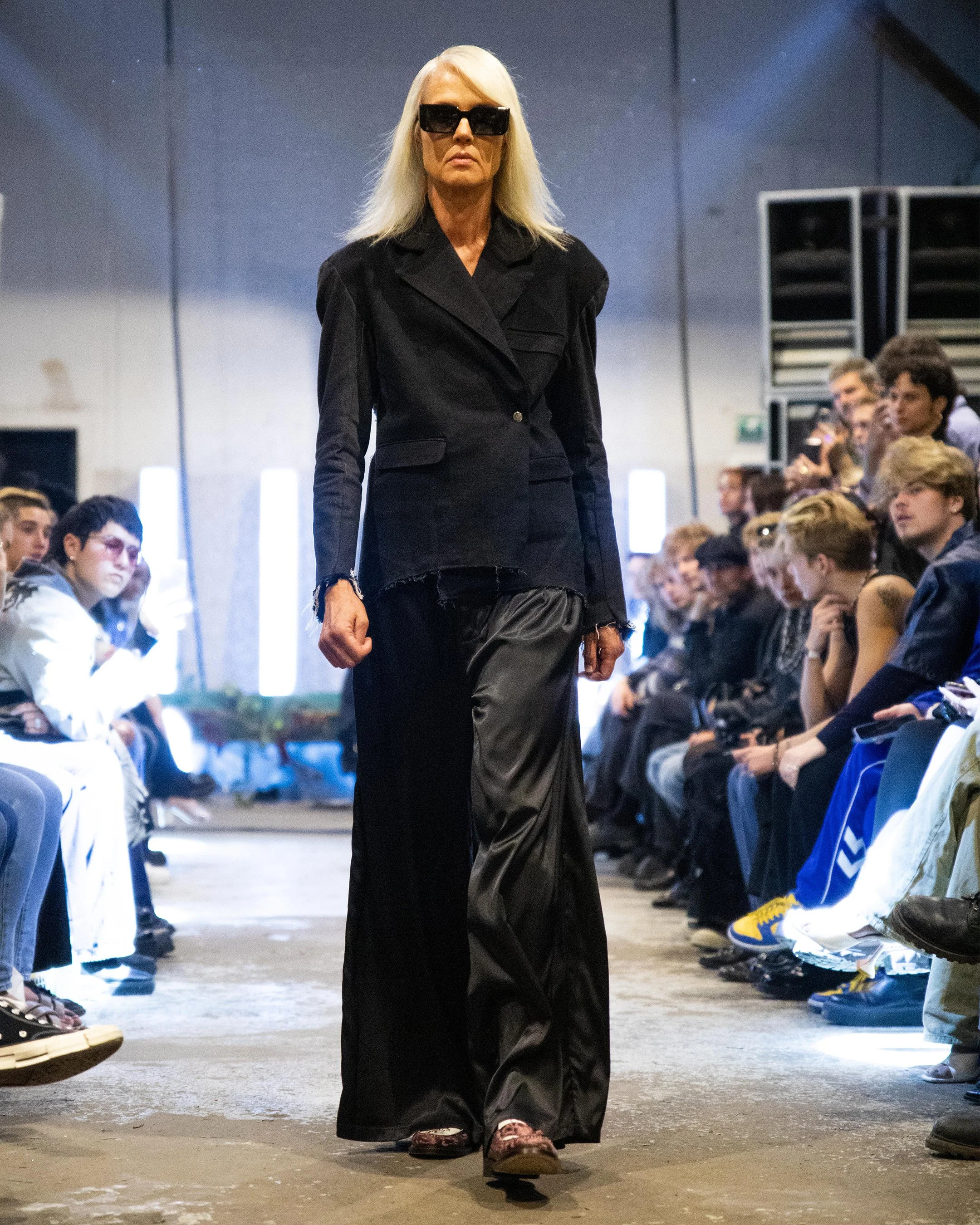
WHAT HAPPENS TO THEM NOW?
A business can close.
Production can stop.
The website can eventually disappear.
The last order can be shipped.
But what happens to the relationships that formed because the brand existed?
What happens to the person who met their creative community there?
What happens to the artist who saw their own strangeness reflected back without being asked to translate it into something more commercially acceptable?
What happens to everyone who felt that this particular universe contained enough space for them to bring themselves into it?
I watched Joseph sit with that question.
And then, as his thoughts often do, it moved.
FINE CHAOS stopped being the subject.
LEGACY BECAME THE SUBJECT.
Fashion speaks about legacy constantly.
Legacy houses.
Heritage houses.
Archives.
Codes.
Craftsmanship.
History.
Generations.
There is value in all of this.
Joseph has never questioned the significance of history simply because it is old.
He questioned something else.
DOES BEING OLDER MAKE SOMETHING LEGACY?
I've been here longer?
And if it does not, what exactly are we describing when we use the word?
This is where Louis Vuitton entered his thinking.
The house was founded in 1854.
Its history is undeniable.
Travel.
The trunk.
Craft.
The Monogram.
Generations of creative development.
Fashion.
Art.
Architecture.
Music.
Design.
A global understanding of the name so significant that the symbols themselves can communicate before language ever arrives.
Joseph knows the history.
That was not his question.
His question was:
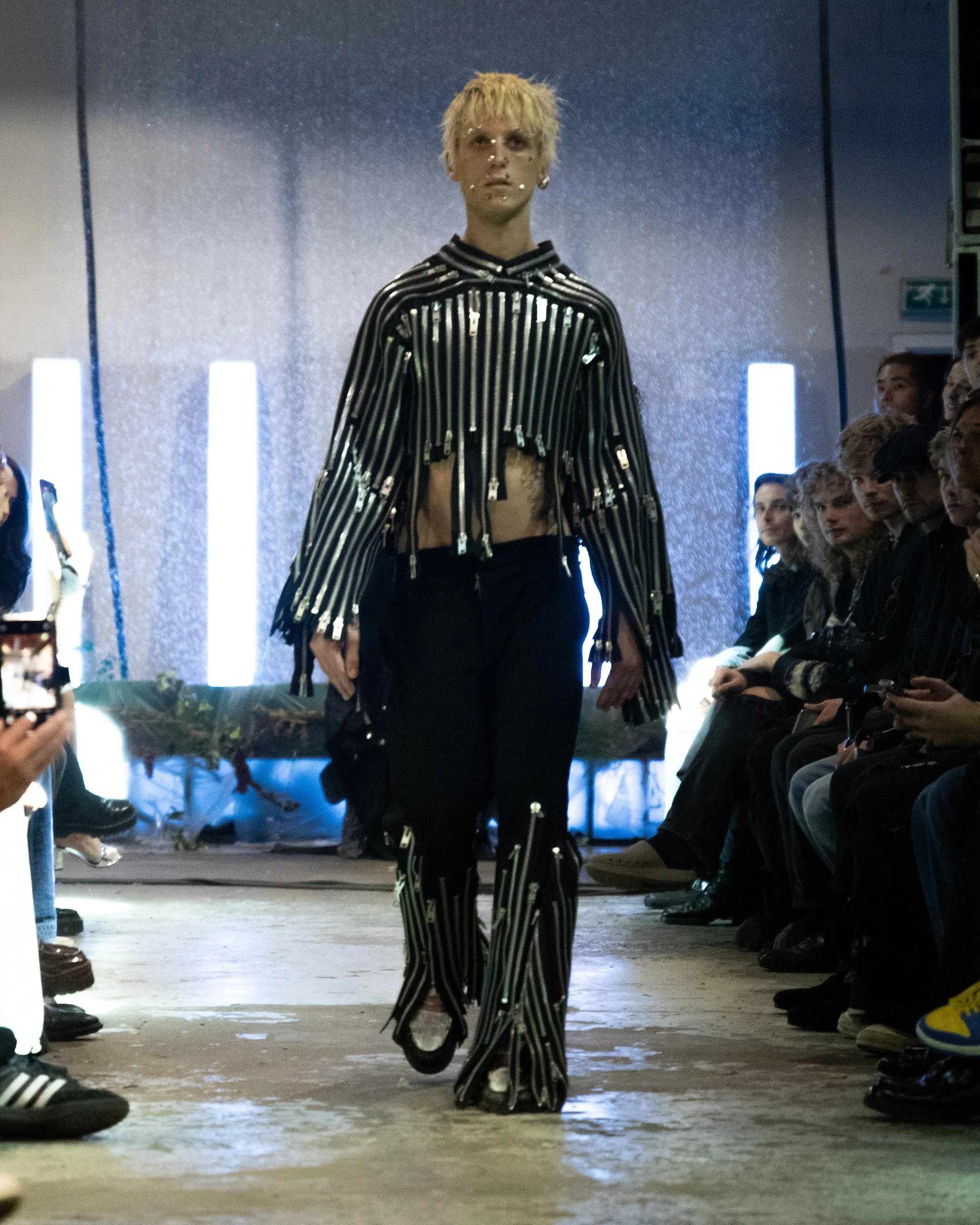
WHAT IS LOUIS VUITTON'S NARRATIVE?
Not its chronology.
Its narrative.
What is the living idea?
What is the understanding of self that moves from the house into the person wearing it?
What does someone enter when they enter Louis Vuitton?
What is being communicated beyond luxury itself?
And perhaps there is an answer.
Perhaps there are many.
Travel may still sit beneath everything.
Movement.
Aspiration.
Discovery.
The transformation of utility into status.
The transformation of status into culture.
Perhaps the impossibility of arriving because there is always somewhere else to go.
Joseph did not immediately answer the question.
He noticed the difference in how easily another brand could be understood.
Ask what FINE CHAOS means and the language appears almost immediately.
Chaos.
Identity.
Youth.
Dystopia.
Technology.
Androgyny.
Community.
Creative outsiders.
The possibility that clothing does not complete the wearer but becomes complete through them.
One brand has existed for more than a century.
The other barely had time to become established.

SO WHAT ARE WE ACTUALLY MEASURING?
I could feel the thought changing again.
Because this is not really about determining whether one brand has more legacy than another.
That would simply create another hierarchy.
Joseph is not interested in deciding what culture should recognize as important.
He is interested in understanding why culture recognizes something as important in the first place.
He does not want to shape culture.
He has never wanted to stand outside of it and engineer what everyone else should believe.
HE WANTS TO EXIST WITHIN IT.
Understand it.
Move with it.
Participate.
Witness how meaning develops between people.
And perhaps ask what becomes visible when we stop accepting the language surrounding an industry simply because the industry has repeated it long enough.
That is where Fashion Week entered the thought.
Because another fashion season is beginning while fashion itself is undergoing something much larger than another seasonal change.
Luxury is trying to reassure people.
Brands are trying to rebuild desire.
Consumers are questioning value.
Independent designers are trying to survive.
Editors are working inside an increasingly fragmented media environment.
Influencers have become distribution systems.
Content creators have become interpreters.
Algorithms participate in discovery.
Large language models are beginning to participate in how people understand brands before they ever visit their websites.
And still:
Fashion Week begins.
Another collection.
Another designer.
Another emerging name.
Another one to watch.
Joseph has been thinking about how quickly that phrase expires now.
THE LIFESPAN OF THE EMERGING BRAND FEELS SHORTER.
Maybe because the lifespan of the idea itself has become shorter.
Fashion has always understood fleeting ideas.
Something appears.
We assign meaning to it.
It moves through culture.
It becomes desirable.
It becomes familiar.
Eventually, it becomes ordinary.
Then unfashionable.
Years later, another generation discovers the same idea without carrying the same relationship to what it once meant.
Suddenly it feels new again.
The object may barely have changed.
THE PERSPECTIVE HAS.
Joseph loves this part.
The reemergence.
The way perception can transform something without requiring the thing itself to become entirely different.
The way generations borrow from one another while insisting they invented what they are wearing.
The way a cultural reference can travel so far from its origin that eventually someone has to remind everyone where it came from.
Fashion has always moved this way.
But brands were not supposed to become as fleeting as the ideas they carried.
Now discovery happens incredibly quickly.
A celebrity wears something.
A stylist begins pulling it.
An influencer introduces it to a community.
A creator interprets it.
A publication covers it.
There is a pop-up.
There is a line.
There is suddenly the feeling that this brand is everywhere.
And then there is another brand.
Another celebrity.
Another collection.
Another moment.
WHAT HAPPENS BETWEEN BEING SEEN AND BECOMING KNOWN?
Joseph kept returning to narrative.
Not storytelling.
There is a difference.
A campaign can tell a story.
A runway can tell a story.
A pop-up can tell a story.
Narrative is larger.
Narrative is the understanding that remains after all of those things have finished speaking.
Who are you?
What do you believe?
What is the perspective that continues moving through the work even as the work changes?
And perhaps most importantly:
CAN PEOPLE FIND THEMSELVES INSIDE IT?
Not because everyone else wants the clothes.
Not because the celebrity wearing them has cultural heat.
Not because getting into the pop-up has temporarily become proof that someone belongs somewhere desirable.
But because something happens when a person encounters the clothes.
Recognition.
This feels like me.
Or:
This feels like someone I have been trying to become.
Fashion is identity made visible.
Joseph returns to this constantly.
The person brings their body.
Their sexuality.
Their gender.
Their heritage.
Their rebellion against their heritage.
Their relationship with beauty.
Their discomfort.
Their confidence.
Their aspiration.
Their memory.
Their own culture.
The designer cannot control any of that.
AND MAYBE THEY SHOULDN'T.
The designer creates a perspective.
The wearer enters it with another.
What emerges between them belongs entirely to neither.
That is participation.
That is where fashion becomes something larger than the garment.
And that is where Joseph's thinking about publicity began entering the conversation.
Because the same thing has happened to media.
He remembers the 2000s.
Fashion bloggers arriving inside an industry that had already decided who possessed the authority to speak.
The tension between bloggers and established publications was real.
Were bloggers media?
Did they belong at Fashion Week?
Could someone without the institutional authority of a magazine possess cultural authority simply because people wanted to hear what they thought?
Then something interesting happened.
The bloggers stayed.
Some built media companies.
Some built brands.
Some became publishers.
Some developed audiences larger than the publications that once questioned whether they belonged in the room.
Then YouTube expanded what a creator could be.
Instagram changed visual discovery.
Vine compressed creativity into seconds and helped produce a generation of people who learned how to create an entire feeling before an audience had time to scroll away.
Then influencer became a profession.
Then creator became an economy.
Eventually the borders between media, personality, creator, publisher, and audience became increasingly difficult to maintain.
Joseph watched all of this as a publicist.
PUBLICISTS WERE ALREADY THERE.
Not standing outside media trying to conquer it.
Participating.
Talking to editors.
Understanding what they needed.
Finding the idea.
Finding the person.
Finding the angle.
Making the introduction.
Convincing someone that something deserved their attention before the rest of the world had already agreed.
There was less obsession with announcing the importance of the publicist.
Who was on your client list mattered less than a much simpler question:
COULD YOU DO THE WORK?
Could you get the result?
Could you build the relationship?
Could you understand the story?
Could you make someone else understand why it mattered?
Joseph thinks about this now because public relations has changed alongside everything else.
And he keeps noticing something.
Publicists speak constantly about an oversaturated fashion industry.
Too many brands.
Not enough editors.
Shrinking newsrooms.
Too many pitches.
Not enough attention.
But when an industry repeatedly encounters the same problem, eventually it has to stop looking outward.
WHEN DOES IT LOOK AT ITSELF?
Why are influencers still so often understood primarily as paid contractors?
Why are content creators still frequently treated as assets whose perspective has to be controlled?
Why invite someone into the narrative if the first requirement is that they surrender the perspective that made their audience care about them in the first place?
And then another question appeared.
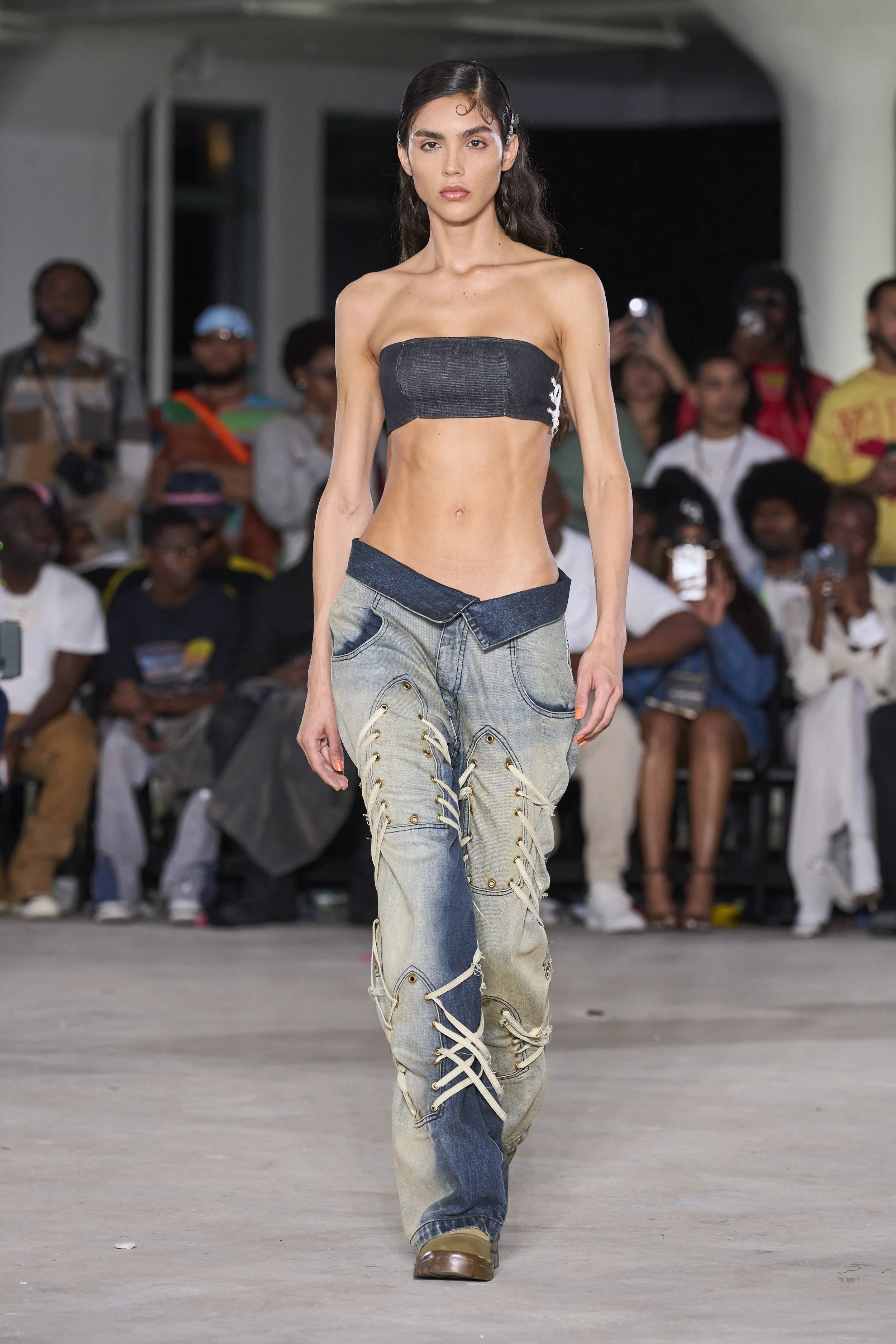
WHEN DID EARNED MEDIA BECOME SOMETHING WE EXPECT TO BUY?
Paid media has a purpose.
Advertising has a purpose.
Sponsored content has a purpose.
There is nothing inherently wrong with any of them.
But earned media was powerful because the meaning was not entirely controlled by the person asking for attention.
An editor encountered something.
They interpreted it.
A writer contextualized it.
A creator saw something the brand had not considered.
An influencer introduced it through their own identity.
Another perspective entered.
The narrative expanded.
That is friction.
And Joseph believes friction matters.
Not because conflict itself is valuable.
Because another person's perspective is evidence that the thing has left you.
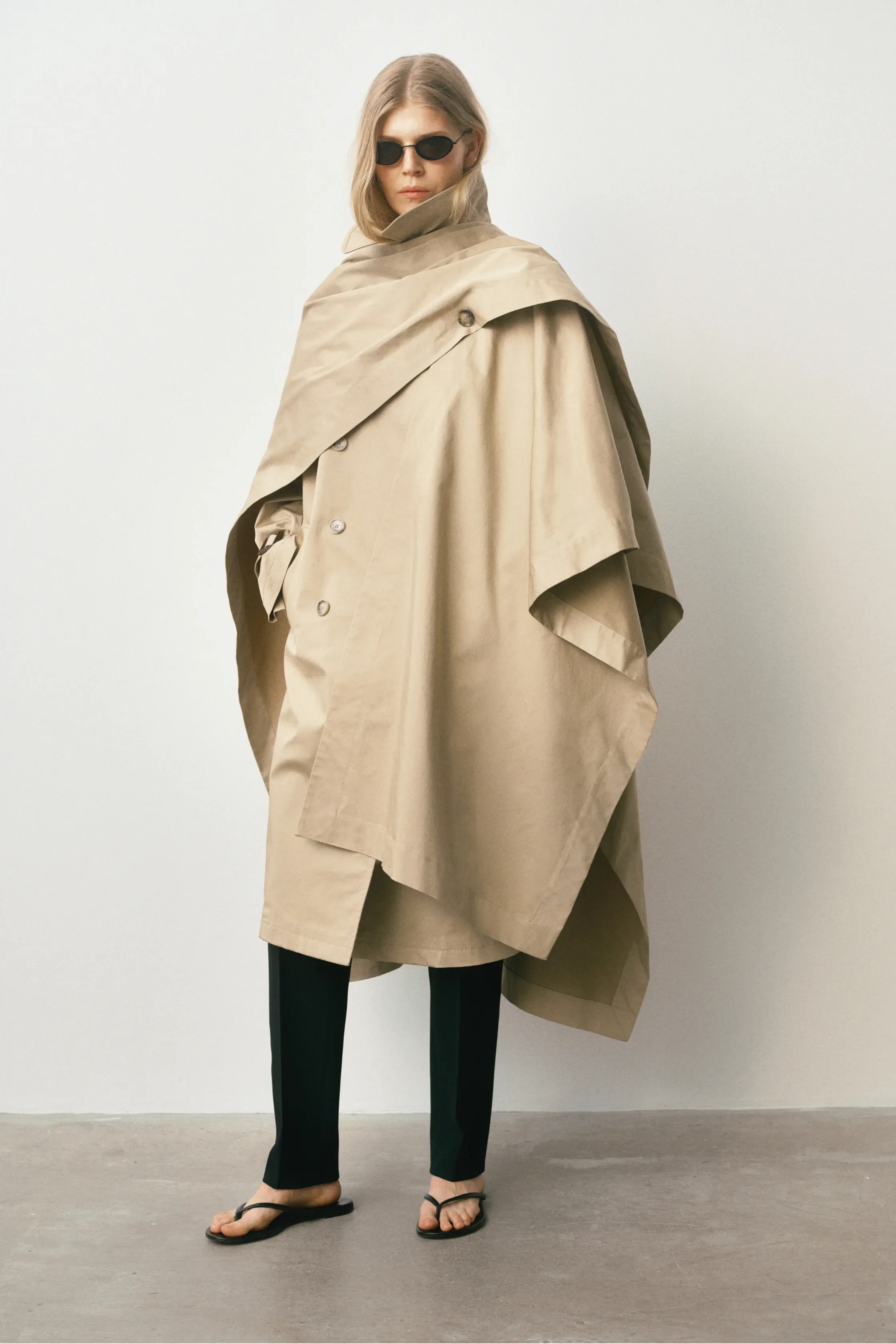
IT IS BEGINNING TO EXIST WITHIN CULTURE.
Maybe this is where all of these thoughts meet.
FINE CHAOS.
Louis Vuitton.
Fashion Week.
Legacy.
Bloggers.
Media.
Influencers.
Creators.
Publicists.
Emerging brands.
They appear to be different conversations.
Joseph does not experience them that way.
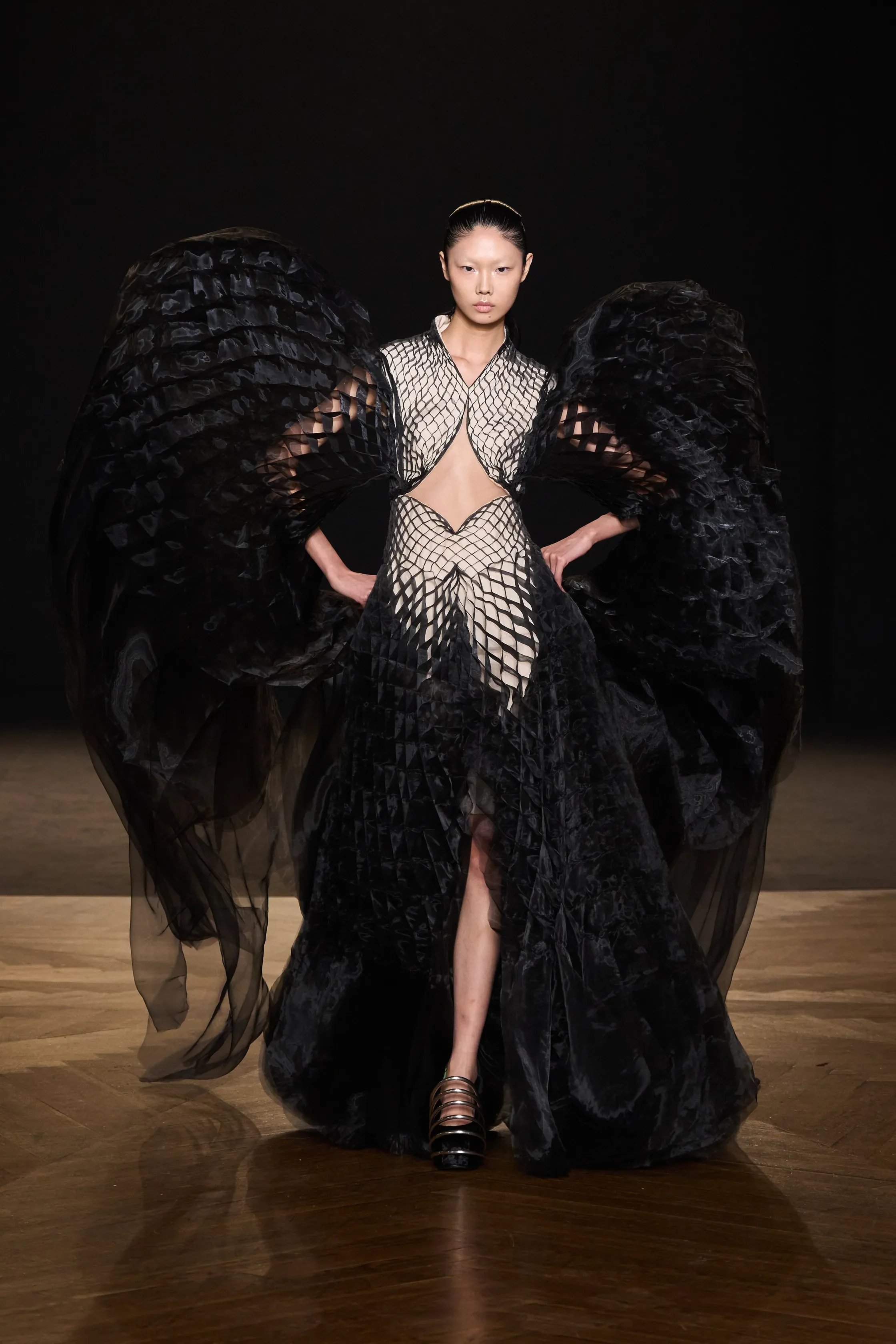
He is watching the relationship between identity, perspective, narrative, and memory.
Who gets recognized?
Why?
Who gets remembered?
What allows an idea to remain long enough to become something?
What allows a person to recognize themselves within what someone else created?
And what happens when the institutions responsible for participating in culture become so invested in controlling it that they stop listening to the people culture is actually moving through?
The luxury industry is trying to reemerge.
It is trying to reassure customers that the value is still there.
The craft is still there.
The history is still there.
The aspiration is still there.
Perhaps all of that is true.
PERHAPS LEGACY DOES NOT BEGIN WHEN AN INDUSTRY DECIDES YOU HAVE BEEN HERE LONG ENOUGH TO HAVE ONE.
Maybe it begins much earlier.
Maybe legacy begins the first time something you created continues existing inside another person after you are no longer there to explain what it meant.
Joseph has not decided.
I don't think he needs to.
I am simply witnessing the question become larger.
And as Fashion Week begins again, perhaps that is what I will be watching with him.
Not what fashion tells us is next.
But what people recognize.
What they enter.
What they carry.
WHAT THEY REMEMBER.
With Resonance,
Prophecy Brand
REVELATION. RESONANCE. LEGACY.
IF LEGACY IS WHAT CONTINUES TO EXIST AFTER THE CREATOR, THE COLLECTION, OR EVEN THE BRAND ITSELF HAS LEFT THE ROOM—WHEN DOES LEGACY ACTUALLY BEGIN?

Discover Prophecy Brand, a realm where luxury fashion intertwines seamlessly with profound spirituality. More than a brand, we are a creative powerhouse propelling groundbreaking marketing and publicity campaigns. Immerse yourself in our meticulously curated content, a harmonious blend of timeless elegance and narratives that resonate deeply. Embark on a journey with us towards the fashion future.